APA’s 2025 Year in Review
With more than 40 years of experience conducting education policy research, APA believes that continuous learning is essential—not only for K-12 students and education practitioners, but for researchers like us as well. This year marked a period of growth and adaptability for APA and its clients amid persistent challenges and heightened uncertainty. From celebrating employee milestones to advancing our work in school finance and exploring new issue areas in program evaluation, we reflect on a productive and memorable year and look ahead to the year to come.
Expanding Our Expertise

APA Vice President Dr. Amanda Brown received her Doctor of Education in May of 2025.
In June, our incredible Vice President, Dr. Amanda Brown, earned her Doctor of Education (Ed.D.) in Leadership for Educational Equity from the University of Colorado Denver. Her dissertation focused on funding equity between schools in Colorado school districts. For 20 years, Amanda has been committed to advancing educational equity, and this achievement further reflects her dedication, expertise, and passion for creating lasting impact in the field.
APA continues to strengthen its organizational capacity by investing in intensive employee training on topics such as strategic planning through LBL Strategies and school finance through Georgetown University’s Edunomics Lab. Together, these investments reflect APA’s ongoing commitment to continuous improvement, ensuring our team remains at the forefront of research practices.
Our team is also conducting internal research on emerging education policy trends that reflect staff interests and offer practical value to the field. Through APA’s partnership with Brown University’s Urban Education Policy master’s program, APA is hosting a graduate student intern who is advancing internal research on early childhood education (ECE) access in rural communities. This research will inform APA’s understanding of place-based barriers and opportunities in ECE, positioning us to better support clients strengthening rural early learning systems.
Improving Access to Affordable Preschool
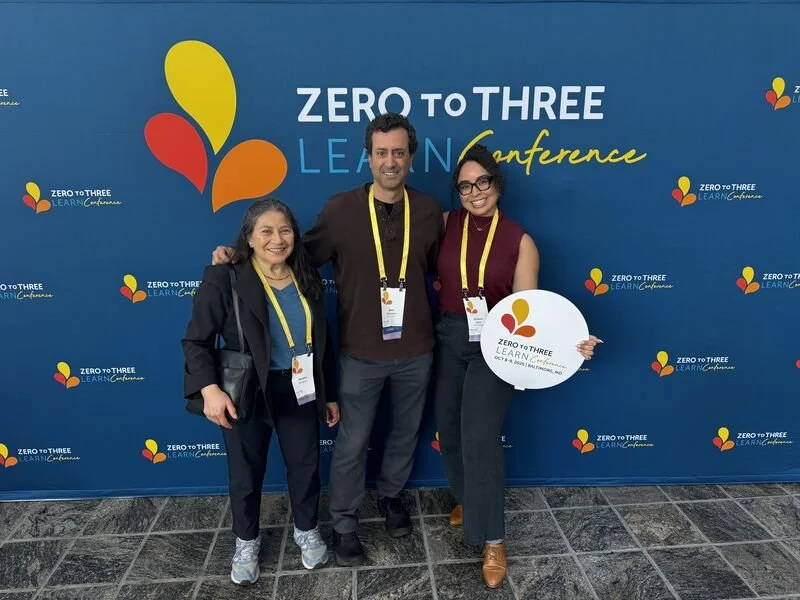
APA co-CEO Dale DeCesare and Associate Brianna Sailor attended the ZERO TO THREE LEARN Conference with Mariana Enriquez to present findings from the DPP Evaluation.
In 2025, APA completed a three-year evaluation of the Denver Preschool Program (DPP), a city-funded initiative that provides tuition assistance for Denver families to afford high-quality preschool.
APA deployed a variety of stakeholder engagement activities that captured perspectives from families, providers, and early childhood leaders. The findings revealed persistent barriers for families in accessing preschool including high costs, fragmented systems, limited availability of high-quality options, and logistical challenges. Additional discussions with providers and system leaders highlighted a shortage of preschool instructors, growing social emotional and behavioral needs among children, and strong interest in expanding DPP’s role to better support infants and toddlers. Unlicensed providers further emphasized the need for greater recognition, professional learning, and clearer pathways to licensure.
APA shared findings at national conferences including ZERO TO THREE LEARN and the AERA Annual Meeting, using these venues to engage researchers and practitioners in conversations about family-centered, equity-focused approaches to early childhood systems. The findings from APA’s evaluation report will inform DPP’s efforts to strengthen access, affordability, and equity throughout Denver.
Providing School Finance Expertise
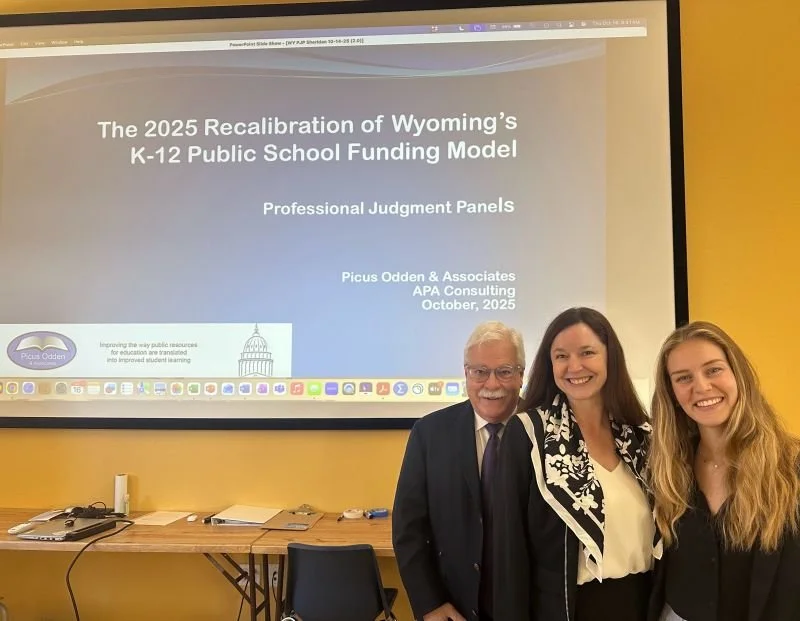
APA Vice President Dr. Amanda Brown and Associate Anna Adams, alongside Dr. Larry Picus from Picus Odden & Associates, at a Professional Judgement Panel in Laramie, Wyoming.
In 2025, APA continued its decades-long focus on delivering expert research and consulting services to help states and school districts tackle complex school finance challenges. In Colorado, APA and partners completed an input-based adequacy study for the Department of Education that leveraged national best practice research and educator expertise to identify the resources needed to ensure all students can be successful. APA also supported Vermont’s Agency of Education to produce a report of key themes that culminated a yearlong 2024 stakeholder engagement effort, the Listen and Learn Tour, and another report that addressed career and technical education (CTE) funding and governance. In Wyoming, APA in partnership with Picus Odden & Associates is supporting the legislature’s Select Committee on School Finance Recalibration as it undertook its charge to recalibrate the state’s formula for funding schools. In Maryland, APA has partnered with six Maryland school districts to assist in the implementation of the Blueprint for Maryland’s Future, the state’s landmark education reform law enacted in 2021.
Addressing Barriers for Migratory Students
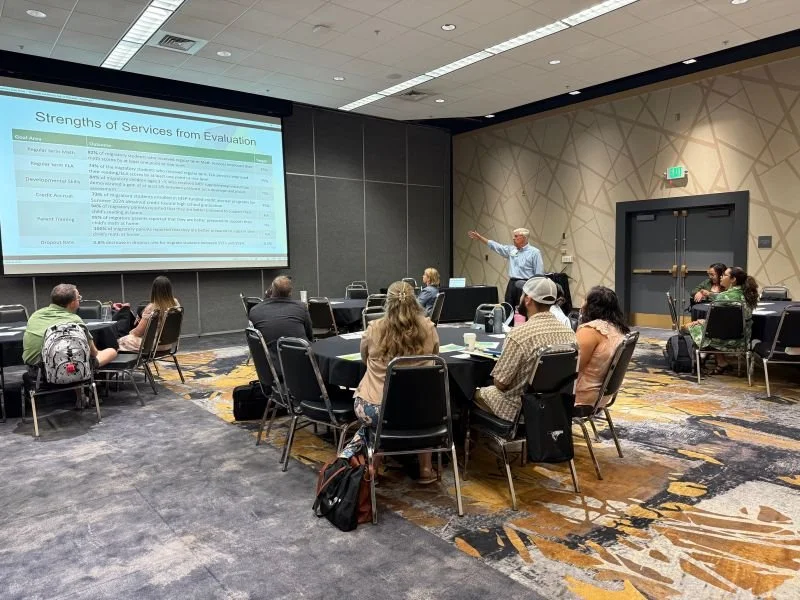
Senior Associate Dr. Robert Reichardt presenting findings from MEP at OSPI’s Art of Belonging Conference.
This year, APA completed a statewide evaluation report and comprehensive needs assessment (CNA) for the Washington Migrant Education Program (MEP), a federally funded initiative that serves the unique needs of migratory students. Drawing on analyses of student performance data, program documentation, and extensive interviews with migratory students, families, and state and local MEP staff, the reports detail migratory students’ academic, social-emotional, and basic needs, as well as the MEP’s progress in addressing them.
APA presented findings at OSPI’s Art of Belonging Conference, highlighting how arts-based approaches can support migratory students and their families. The presentation shared key research insights with a broad audience and strengthened collaboration with state leaders, practitioners, and advocates working to expand educational opportunities for migratory students.
APA will continue its work with the Washington State Office of Superintendent of Public Instruction (OSPI) in 2026 by developing a new service delivery plan (SDP) informed by findings from this year’s evaluation report and CNA. The updated SDP will guide the Washington MEP’s implementation through 2029 and marks the final step in a multi-year effort to strengthen statewide systems, clarify roles and responsibilities, and ensure migratory students receive equitable, consistent, and high-quality support across the state.
Preview of 2026
APA enters 2026 with a range of ongoing projects and exciting new opportunities. To name a few:
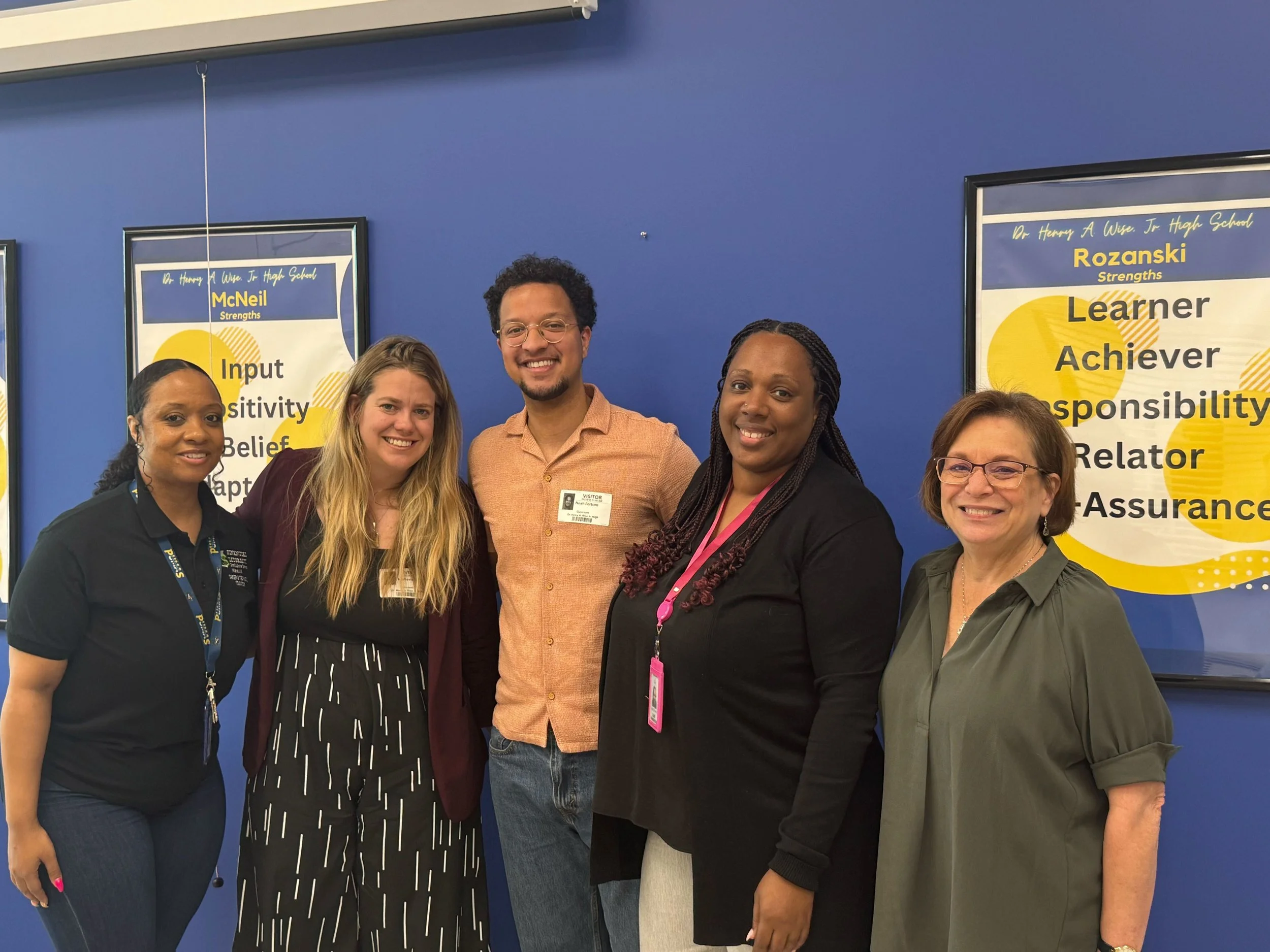
Senior Associate Michaela Tonking and Associate Noah Fortson alongside school staff during a site visit for APA’s work with NEFE.
APA will conclude a study examining the return on investment for states and districts implementing financial education as a graduation requirement, a project sponsored by the National Endowment for Financial Education (NEFE). Building on previous engagement with state, district, and school leaders, APA will continue data collection and analysis with a final report scheduled for release this spring.
APA is entering its sixth and final year as an evaluator for the Colorado READ Act and Early Literacy Grant (ELG), marking the culmination of a multi-year effort to understand how state investments in early literacy are implemented and experienced across districts, schools, and classrooms. Synthesizing findings across years, the final report conducted in partnership with WestEd and RTI will discuss how shifts in policy, professional development, curriculum, and funding have shaped literacy instruction and outcomes for K–3 students statewide.
APA will continue its ongoing work with states to establish, update, and implement their school finance policies. For several years, APA has partnered with WestEd to provide technical assistance to Nevada’s Department of Education and Commission on School Funding as it continuously monitors the implementation of the Pupil Centered Funding Plan, a student-based funding formula the state recently adopted following APA’s 2018 adequacy study and recommendations. APA staff look forward to continuing these important partnerships and supporting the state in its laudable commitment to ensuring their funding formula best meets the needs of the state’s students, schools and districts.
APA will also undertake new work including an evaluation of the federal Charter Schools Program (CSP) grant for the Alabama Public Charter School Commission. Backed by nearly $30 million in federal CSP funding, this initiative is designed to replicate successful school models, strengthen authorizing practices, and ensure that the state’s growing charter sector aligns with the state’s vision for student performance and accountability.
Stay Connected
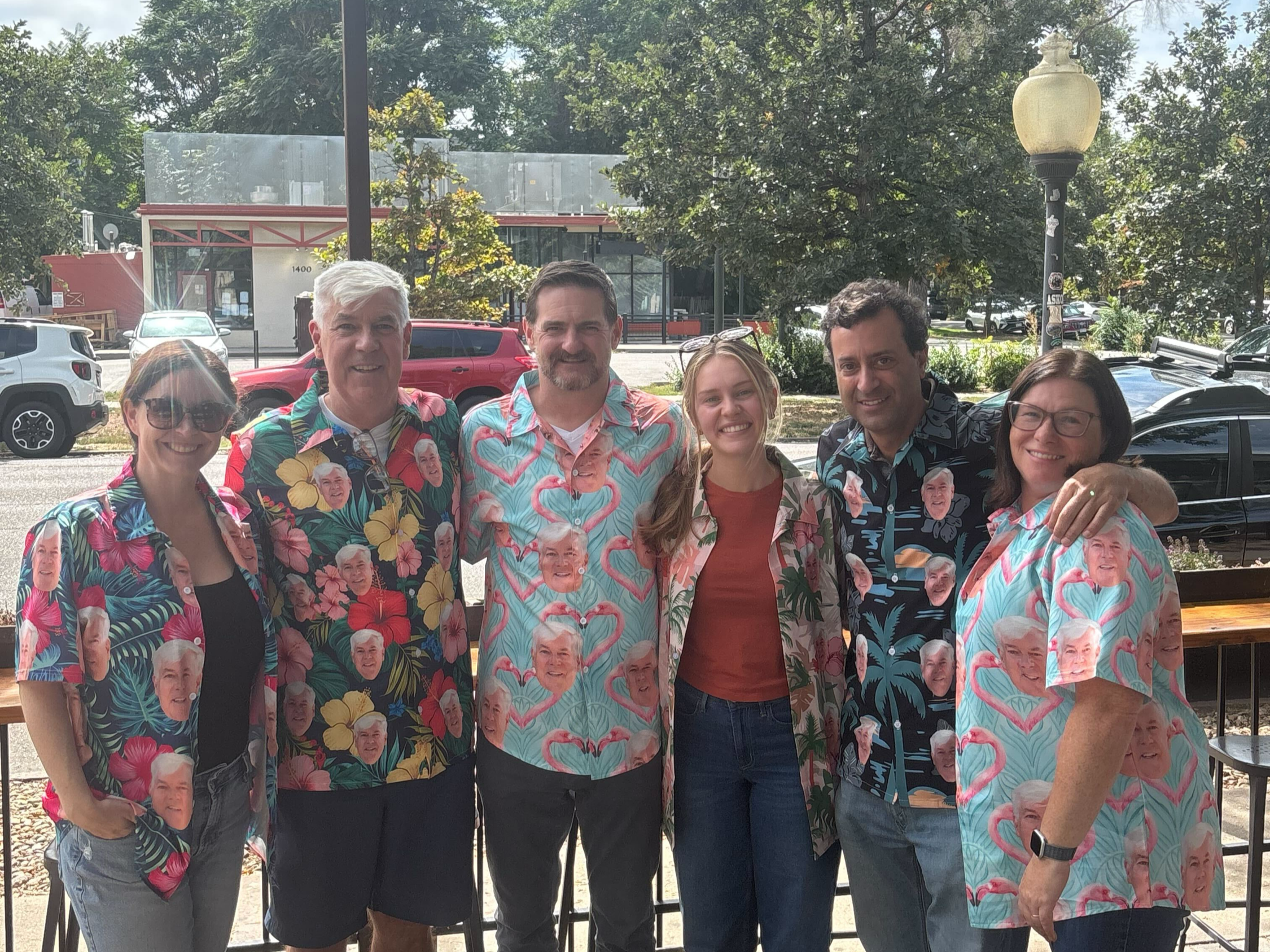
APA staff celebrating Robert’s birthday in Denver, Colorado.
This year, APA staff shared their insights and expertise on pressing issues facing school communities nationwide through a series of op-eds published on the APA website and LinkedIn. These pieces explored how shifts in federal data and declining school enrollment impact school funding and offered actionable recommendations for state and district leaders.
We hope you’ll stay tuned for more APA insights in the new year, including upcoming op-eds on universal preschool programs and continued analysis of national enrollment trends.
Get in touch here - and in the meantime, follow us on LinkedIn for more.